Red Hook, New York · 1859 to today
History of 23 East Market Street
This address has been at work for more than a century and a half — a blacksmith's forge, a hardware store, the Lyceum picture house, and now Charlie O's. What follows is drawn from deeds in the Dutchess County Clerk's office, the county atlas, and the newspapers of the day.
before 1859 – 1888 The forge and the store A blacksmith’s forge, a wagon shop, and the hardware store that replaced them. 3 entries
-
before 1859
Fire, iron and wagons
The oldest thing recorded on this ground is a blacksmith's forge. In 1859 a blacksmith announced in the village paper that he had taken over the Old Stand of Peter Hevenor — and “old stand” meant long established, so smithing was going on here decades before anyone thought to build a store.
-
1867
A working lot
Twenty-one years before the hardware store went up, this ground was already at work. The Beers atlas of Dutchess County draws two buildings on the lot — a blacksmith shop and a wagon shop. Edmund Bassett, writing in the 1920s, remembered the old shops on this spot and the men who worked in them: Billy Mills the blacksmith, John Crandell the wheelwright, and Ely Jewell, who painted the wagons.
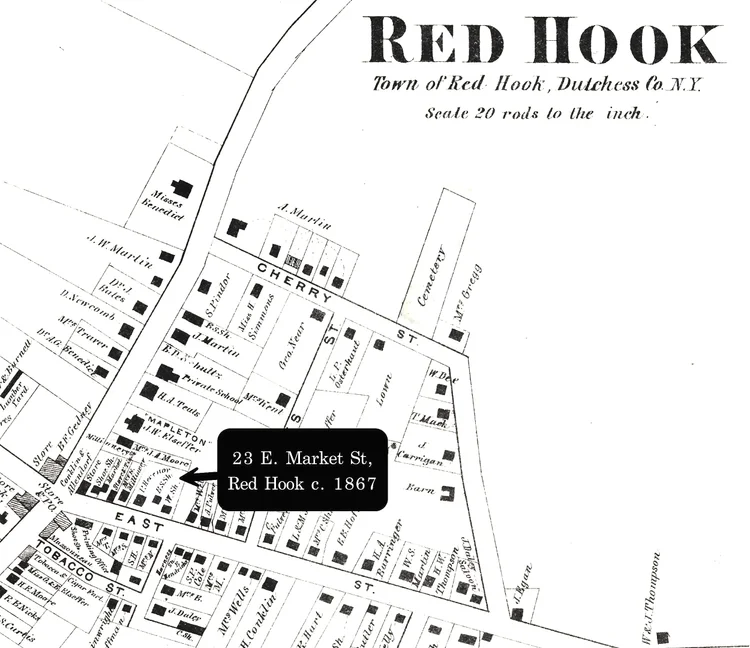
Red Hook village in the 1867 Beers Atlas of Dutchess County -
1888
The hardware store
The Red Hook Journal of 27 April 1888 reported the foundation going in. The old shops came down and a hardware store went up in their place, built for Stickle & Ring on land bought from the Marshall family. Philip E. Fraleigh bought the building in January 1895 and took over the business, running it for a decade — with smithing still going on behind it. Locally it was simply the Fraleigh Store.
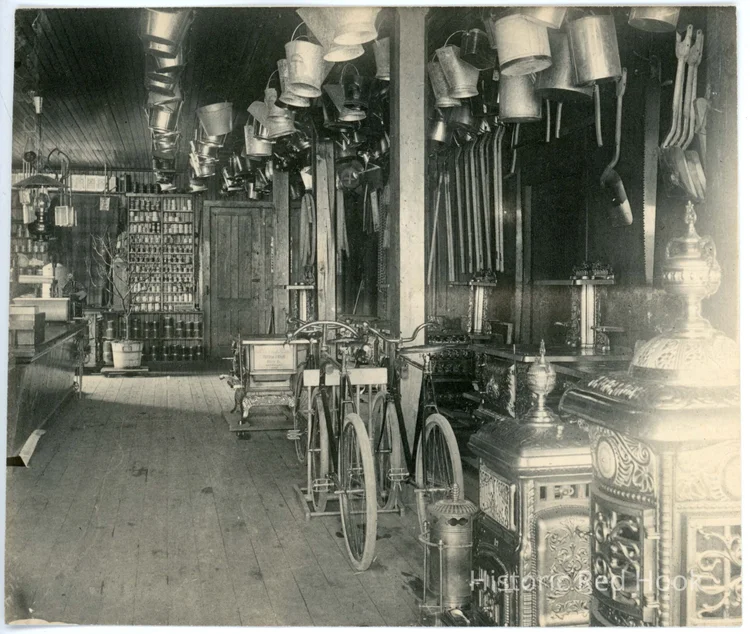
Inside the store in the Fraleigh years · Courtesy of Historic Red Hook 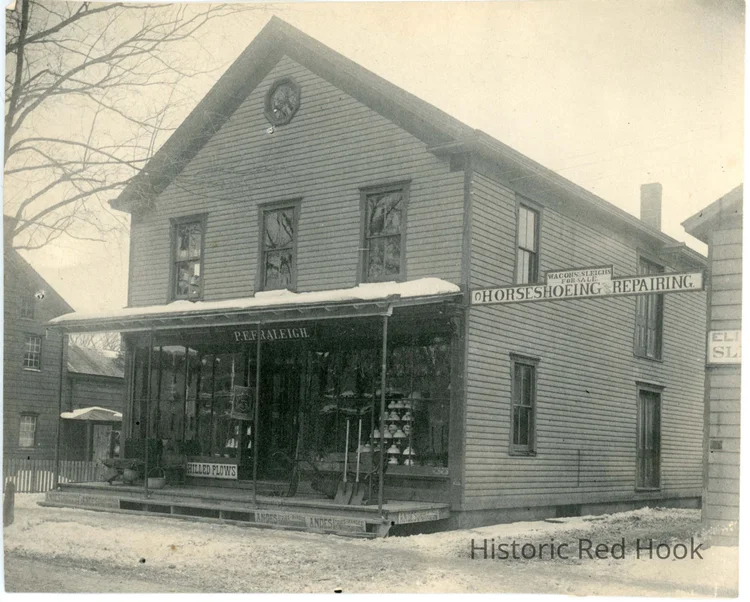
P. E. Fraleigh's Hardware Store — note HORSESHOEING on the side wall · Courtesy of Historic Red Hook
1911 – 1932 The Lyceum years Joseph Griffing turns the store into the Lyceum — Red Hook’s picture house and the village’s hall. 7 entries
-
c. 1911–12
Red Hook gets a movie house
Joseph Griffing — superintendent of the W. H. Baker chocolate factory at Annandale, later president of the First National Bank of Red Hook, and the man the village fire company was named for — converted the old store into the Lyceum, what local historian Clare O'Neill Carr calls the town's first moviehouse. The date can be narrowed from the papers: his son's hardware business moved out in June 1911, and a touring company, the Edwin R. Weeks Co., played the new theatre in November 1912.
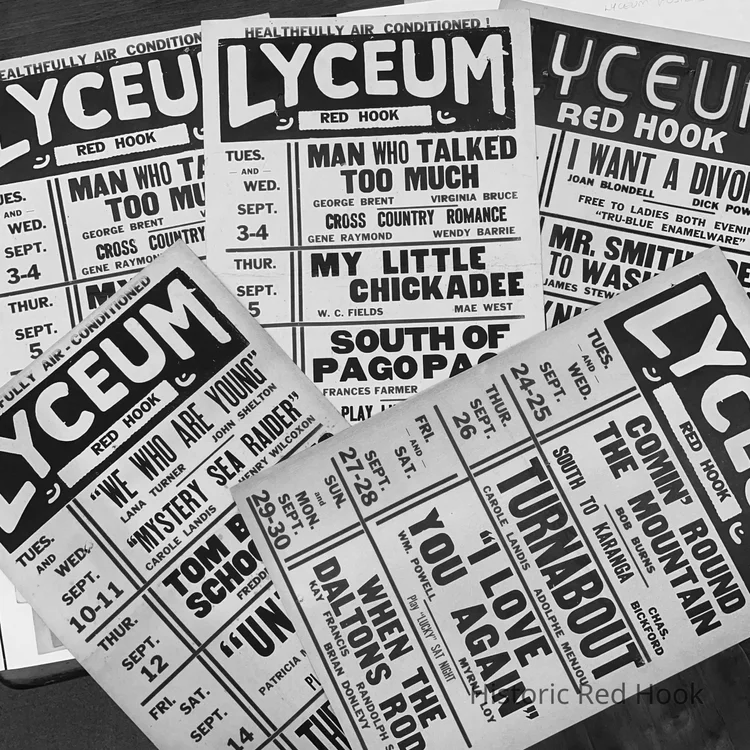
Lyceum program handbills, about 1940 · Courtesy of Historic Red Hook -
1913
Fifteen cents, Friday nights
Regular pictures began in January 1913, the Journal promising them every Friday evening through the season — “if the patronage warrants.” Adults fifteen cents, children ten. That autumn the Lyceum booked five touring attractions off the Syracuse circuit at thirty-five and fifty cents a seat, tickets sold at Griffing's store down the street.
-
1910s–20s
More than a movie house
The Lyceum served as the village hall. Fox Trot classes were advertised here in December 1914; in January 1915 the room held a basketball game against Pine Plains, with dancing afterwards until one in the morning; and from 1920 to 1924 Sunday Mass was said here. The Chautauqua lecture circuit came through as well. And that same December of 1914 — two years after the pictures started — Norman Mead was still advertising a blacksmith shop “in the rear of the Red Hook Lyceum.”
-
1917
Given to the town
“By courtesy of Joseph Griffing the use of the Lyceum was given for the evening. One hundred dollars and fifty cents was realized.” So the Rhinebeck Gazette recorded it. The money bought Christmas boxes for Red Hook's Army and Navy men — the first documented instance of a pattern that runs through this room's history.
-
1920s–33
A Prohibition speakeasy
Prohibition ran from January 1920 to December 1933. The lower level is said to have operated as a speakeasy through those years. The account is a local one; no contemporary record of it has yet been found.
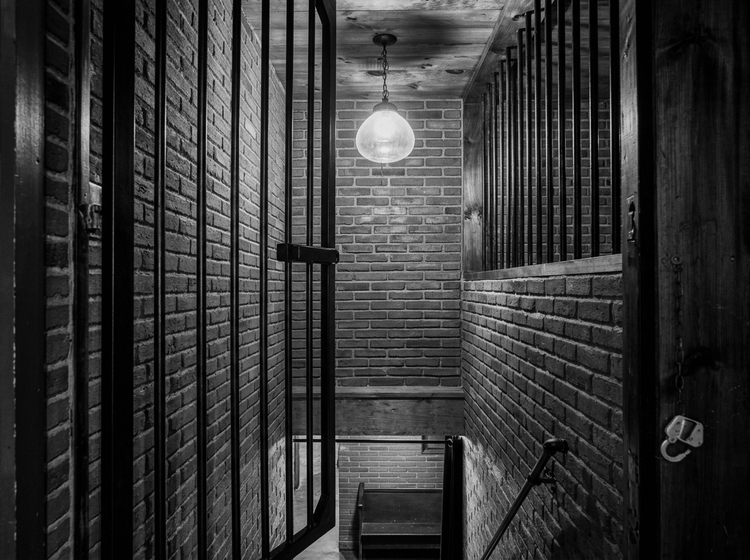
The stairs to the lower level 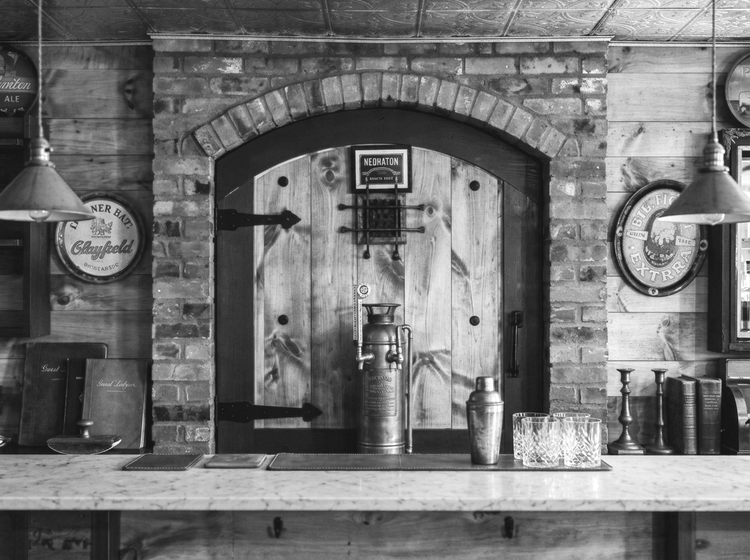
The tunnel in the lower level -
1924
The finest hall between Poughkeepsie and Hudson
That was the Rhinebeck Gazette's assessment in May 1924: Red Hook had “the finest public hall in the Lyceum to be found between Poughkeepsie and Hudson, seating approximately five hundred people, with a modern stage, a huge pipe organ and all modern appliances.”
-
Jan 1932
The talkies arrive
The Lyceum closed for “extensive alterations and repairs” and reopened on a Saturday evening in January 1932, fitted with the latest sound equipment the Western Electric Company could supply. The opening-night picture was John Barrymore in The Mad Genius.
1937 – 1991 The picture house Four decades of proprietors, a two-state circuit, CinemaScope, and a second screen. 6 entries
-
1937–67
The hub of a two-state circuit
Philip Eisenberg began managing the Lyceum in 1937 and bought it outright in 1942, with his brother-in-law Sidney Cohen, from Joseph Griffing's estate. “Working with the Lyceum as a hub,” the Red Hook Advertiser reported in 1953, the partnership had grown to eight theatres across two states — Rhinebeck, Pine Plains, Millerton, two at Hyde Park, and Lakeville and Canaan in Connecticut. A village storefront was running a regional circuit.
-
March 1954
Kurosawa comes to Red Hook
The Dutchess County Film Society, “in cooperation with the Lyceum Theatre,” announced a Film Appreciation Series, to open on 16 March with Akira Kurosawa's Rashomon — in Japanese, with subtitles, at ordinary box office prices. The Red Hook Advertiser ran it on the front page, calling the film “probably the best and most unusual” of the century.
-
May 1954
A screen twice as wide
The management installed a CinemaScope screen themselves, “working late into the night” — a screen “twice again as wide as the older ones,” giving a feeling of depth “without the inconvenience of 3-D glasses.” The Advertiser called it the first cinemascopic showing in the area.
-
1958–79
Roy and Helen Olsen
Roy Olsen began as an office boy at Metro-Goldwyn-Mayer in Manhattan and had supervised chain theatres before taking the Lyceum in 1958 — “because it was there and it was available.” He did not, at first, know how to work the projectors. By his own account he went up to the booth, watched the machines and taught himself; in time he was doing his own repairs. He and Helen sold the candy and the tickets, ran the projectors and washed the windows. Admission in 1978 was $1.50.
-
June 1984
“Lyceum 2 opens next week”
Alexander and Diane Bulay bought the building in 1979 and five years later added a second auditorium at the rear, announcing it in the Lyceum's own advertisement that June. Adults $2, all times. The second screen changed what the house could book: in 1978 it had explicitly not been a first-run theatre, but by November 1988 it was playing The Land Before Time five days after the film opened nationally.
-
1991
The name moves up the road
On 27 November 1991 a six-screen cinema opened on Old Farm Road and took the Lyceum name with it. Its opening advertisement billed it as the Lyceum Six, on Route 9, and gave the old Lyceum’s telephone number, 758-3311. The name travelled because its owner did: Al Bulay, who held this building, opened the new house with Woody Klose as Lyceum Six Partners. Films kept running in the rear auditorium here, later billed as the Lyceum Annex.
1990s – 2008 The Annex and the last shows The name moves up the road; the old house keeps running to the end. 3 entries
-
mid-1990s–2013
The Annex Antique Center
The original auditorium found a second life as an antique center, documented at this address by March 1994. For nearly twenty years people browsed furniture beneath a movie screen nobody had taken down, the room left largely intact. The shop moved out in May 2013.
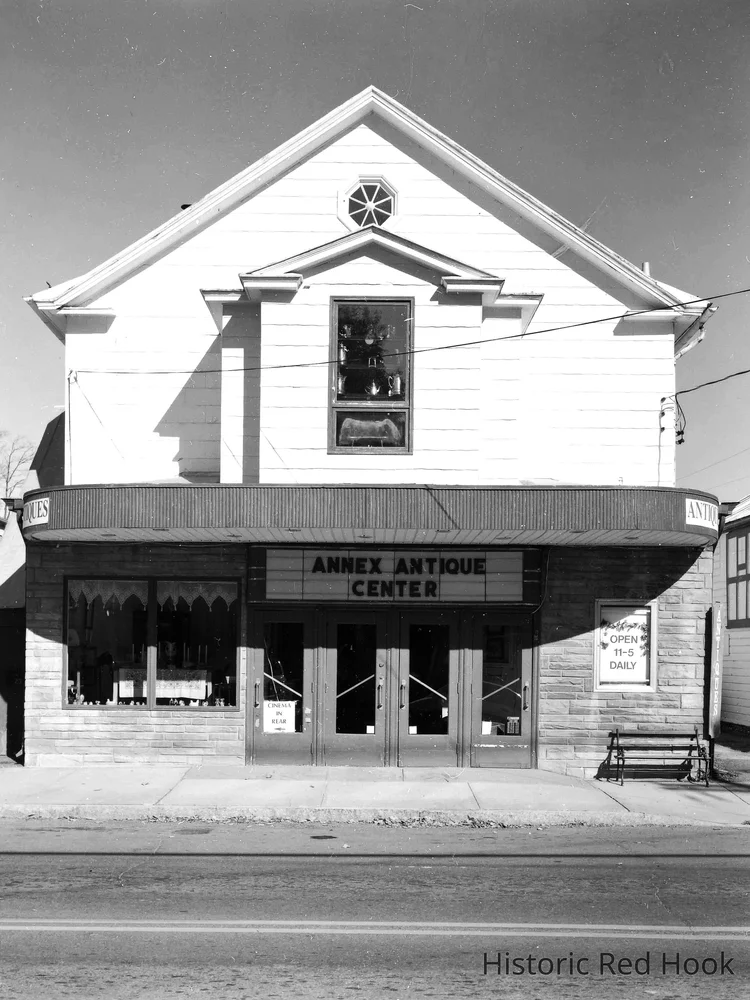
The Annex Antique Center · Courtesy of Historic Red Hook -
to 2008
The other screen kept running
The pictures did not stop. While antiques filled the older room, the 1984 auditorium carried on as the Lyceum Annex — one screen, a single title at a time, holdovers and second runs for anyone who had missed them up the road.
-
July 2008
The last picture show
The final film was WALL·E. The last listed show went up at 7:15 on the evening of Tuesday, 29 July 2008, closing ninety-five years of regular movie shows at this address. Six weeks later the building changed hands.
2010 – today Charlie O’s The doors open again. 2 entries
-
Aug 2010
Charlie O's opens
Mike and Vicki Lueck opened Charlie O's, naming it for their son, Charlie Otto, and keeping the building's history on the walls. For the first few years the antique center was still winding its way out of the old auditorium next door.
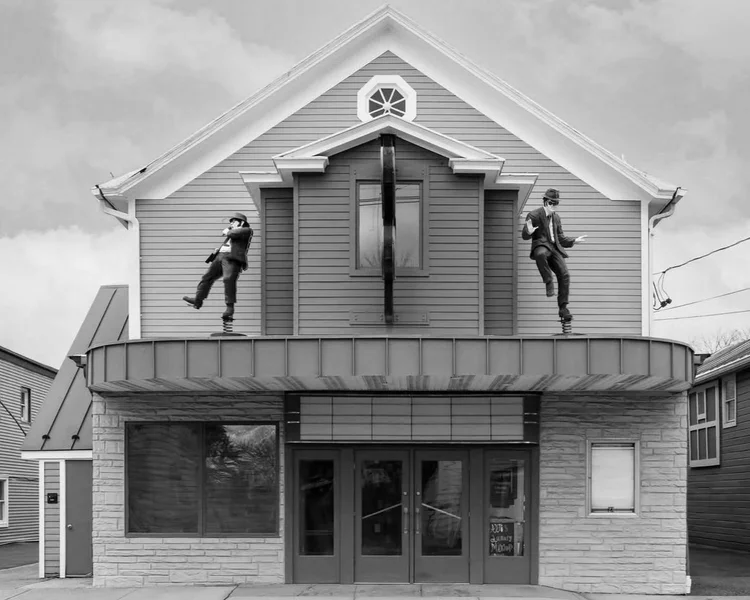
Charlie O's, 23 East Market Street 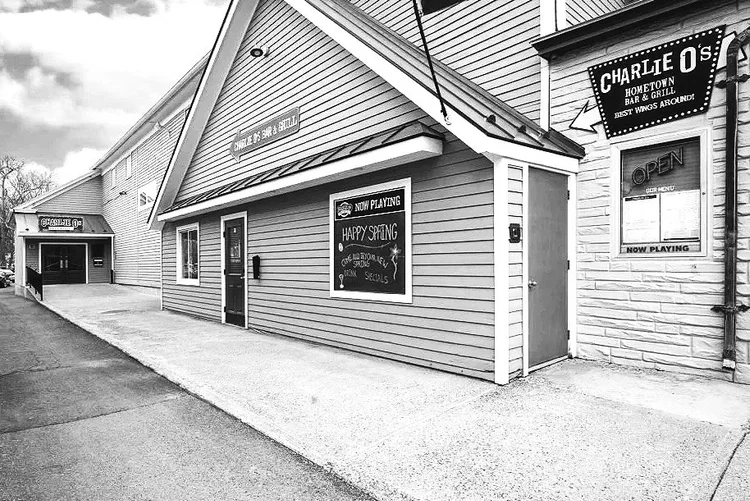
The entrance, down the side of the building -
2026 and beyond
A new chapter
East Market Hospitality begins the next chapter, on a lot that has been put to work since before the Civil War.
Sources: Beers, Ellis & Soule Atlas of Dutchess County, Red Hook village plate, 1867 · Red Hook Journal, 1859–1914 · Rhinebeck Gazette, 1917–1932 · Red Hook Advertiser, 1953–1954 · Millbrook Round Table, 1978–1994 · Dutchess County Clerk deed records, 1888–2008 · Clare O'Neill Carr, A Brief History of Red Hook · Edmund Bassett, Reminiscences of Red Hook · Historic Red Hook · Independent Cinemas show listings, 2002–2008, via the Internet Archive · Cinema Treasures · Charlie O's.
Archival photographs courtesy of Historic Red Hook. Explore more of Red Hook’s history at historicredhook.org/collections.